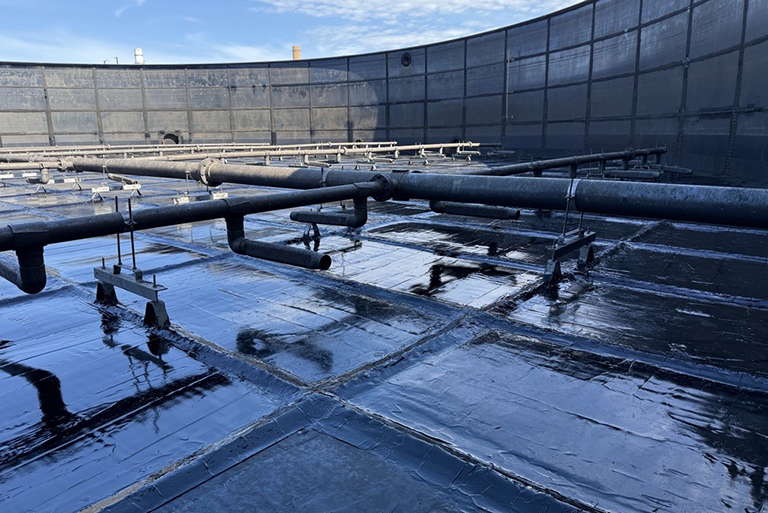
Complex Equipment Repair Ensures Uninterrupted Operations
WesTech’s Novel Solution Addresses Unusual Tank Corrosion
Highlights
- Solved a unique problem without disrupting customer operations
- Prevented fines, penalties, and other sources of financial loss
- Hit 17.5-million-gallon monthly goal
- Maintained strong trust with our customer
- Proved collaborative problem-solving capabilities
Problem
A power utility company’s plant in the southeastern U.S. has been working through a 40-foot-tall ash heap for several years. Per its permitting, the company must treat the water in batches and prepare roughly 17 million gallons of water to discharge monthly. Any disruptions to the water treatment process result in a cascade of issues for the power company and its contractors.
WesTech broke ground at the plant in 2020 to create a full-scale water treatment solution and was contracted for a full Engineering, Procurement, and Construction (EPC) engagement along with design, build, and ongoing operations. Our equipment and operations management have been highly effective, which is why they looked to us when they encountered an unusual problem.
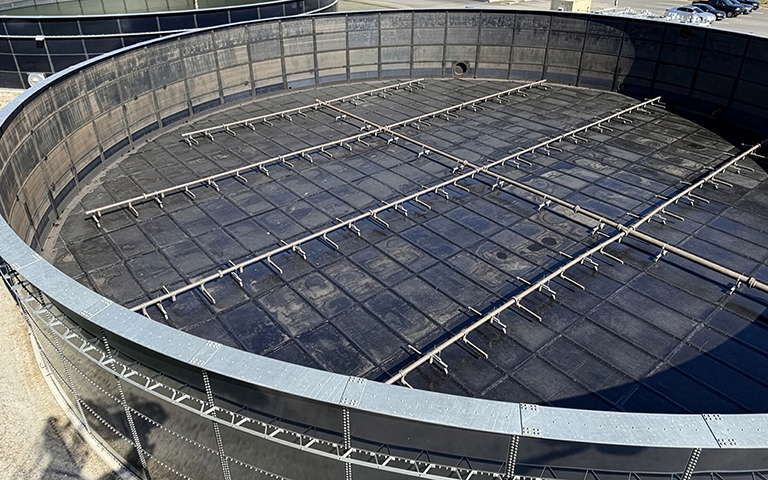
While inspecting four discharge tanks and one feed tank, we discovered an unusual corrosion pattern based on the location. After just two years, the glass-lined, 1.1-million-gallon tanks had a random array of corroded spots in the middle of the four-foot panels rather than just on bolts or joining points.
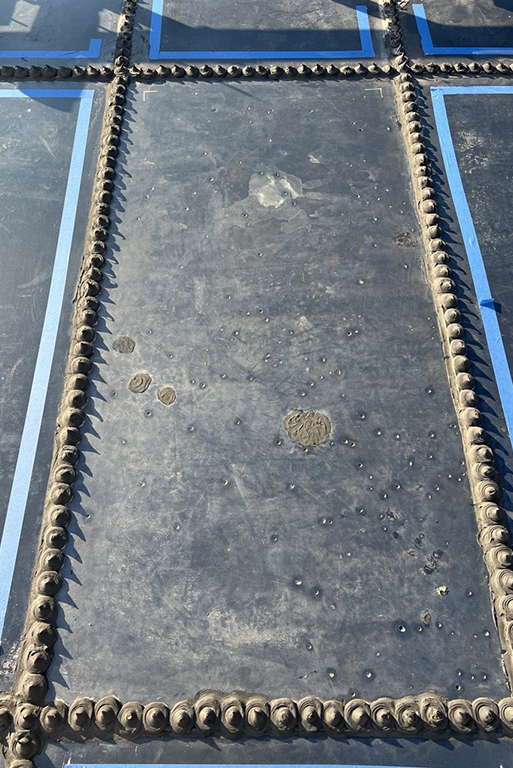
Because these were bolted tanks, the damage couldn’t be repaired with a simple weld. A full demolition seemed the only option, but that created a new problem: the power utility would face heavy regulatory fines if it couldn’t meet its monthly discharge requirements during the downtime.
For perspective, the ash mover on this project is one of many large contractors and is hauling ash with roughly 100 trucks daily. If the treatment facility could not process the water from those loads, operations would stop, impacting revenue from energy as well as resulting in fines from regulators.
Confident in our capabilities, the customer turned to our operations team for urgent help to get the tanks working again as fast as possible.
Solution
A joint effort between several WesTech teams got underway to enable the utility to meet its discharge targets. Thanks to the expertise of our on-site staff, we landed on using a Chevron Industrial Membrane (CIM) elastomer-type epoxy from Chase Corporation. We believed that this would be durable enough to treat the corrosion and stop holes from forming in the tanks.
Fixing the problem wasn’t easy. The CIM product required a controlled application environment, which was difficult to achieve in an open field. For example, tank temperatures fluctuated a lot and could reach up to 170 degrees when mostly empty.
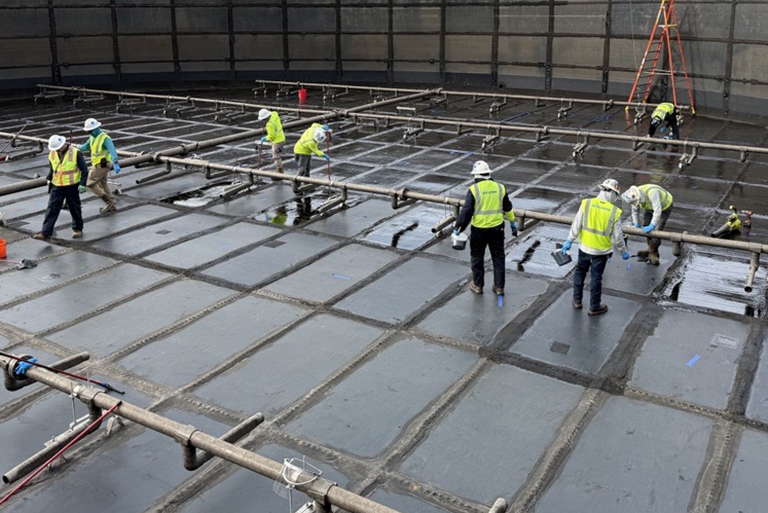
We had to meticulously clean the tanks, apply the first layer of the epoxy, let them dry, and recoat. Based on this process, we worked closely with Chase Corporation to dial in the CIM formula so that it could withstand all of the variables while sealing off the corrosion for long-term use. Once we had the right mix, we successfully used the epoxy on two of the discharge tanks before temperatures dropped in the Southeast for winter.
Results
We managed to solve what seemed to be an unsolvable problem for our customer. Even without upfront insight into the exact issue, we repaired the glass-lined tanks efficiently with no interruption to the plant’s treatment processes. The tanks were reexamined a few months later and the solution proved successful and durable.
By preventing the tanks from going offline and shutting down plant operations for an extended period, we saved the customer hundreds of thousands in fines and lost revenue.
Even with the challenging situation, we hit our monthly goals and mitigated any risk of penalties or setbacks for the customer. To date, we have averaged around 17 million gallons of treated water per month for more than two years, a testament to our ability to partner with our customers to solve difficult complex problems.