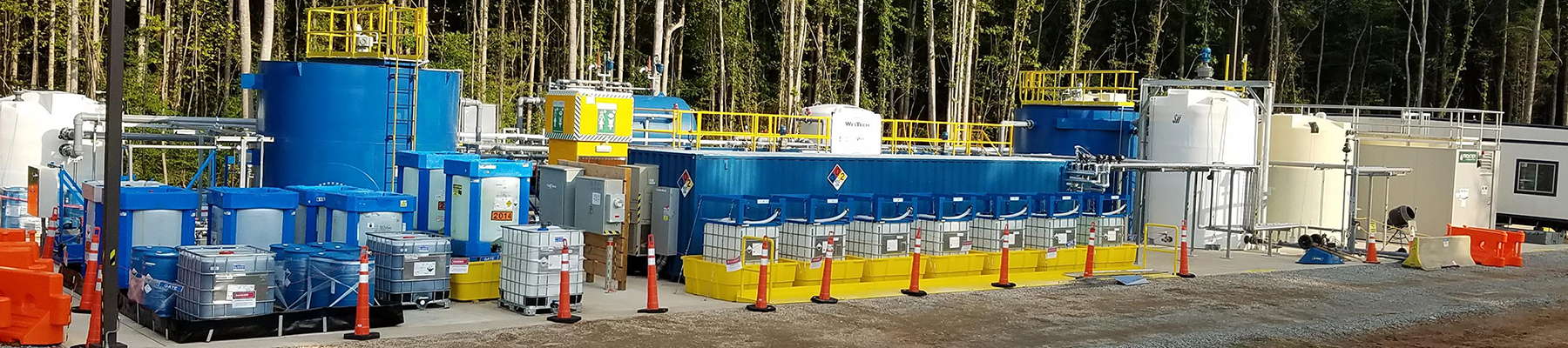
Pile runoff basins have historically been used for the removal of suspended solids (coal fines) prior to discharge to wastewater streams. However, it was soon found that other contaminants were in this waste stream. Sulfur compounds contained in coal were oxidized by rainwater and produced sulfuric acid. This is analogous to the production of “acid rain” drainage from mine tailings. Water tinged with sulfuric acid leached other impurities from the coal, producing an acidic runoff contaminated with heavy metals.
The desire to eliminate all types of basins and ponds has prompted the industry to use more refined treatment systems. Acidic streams containing iron, aluminum, and sulfate are treated for removal of these contaminants. Another driver for segregating and treating this stream is ever-decreasing mercury limits. These limits make it desirable to treat the stream prior to comingling with more conventional wastewater streams.
Wastewater characteristics change with rain events. Streams start out highly acidic but dilute with added rain. Dissolved metal levels also decrease the longer it rains.
Heavy Metal Removal
Some heavy metals are removed as hydroxides by raising the pH. The pH is raised by adding chemicals, typically lime or caustic. Since the waste stream flow rate is small, pH adjustment is usually accomplished through caustic addition rather than lime slurry.
For heavy metals effluent requirements that cannot be met by precipitating the metals as hydroxides, sulfide can be added in addition to the pH adjustment. Metal sulfides have lower solubility than metal hydroxides. In these cases, organosulfides or sodium sulfides dosed into the stream precipitate as heavy metal sulfides. These compounds effectively remove mercury down to parts per trillion levels.
Coagulation / Polymer / pH Adjustment
The addition of ferric chloride neutralizes charged particles, promoting flocculation and enhancing clarifier performance. Ferric chloride also precipitates mercury and organic matter. Polymer addition yields larger flocs, further enhancing clarifier performance. The wastewater is clarified by a CONTRAFAST® Clarifier, while pH is normalized with hydrochloric acid.
CONTRAFAST
Raw water, recirculated sludge, and treatment chemicals enter the center draft tube. They are mixed and recirculated within the reactor by a variable speed impeller. The impeller accelerates solids formation and densification. A high-velocity upflow port prevents settling and moves water to the settling chamber.
The water passes under a baffle, then flows upward through settling tubes and into the effluent collection launder. Dense sludge settles to the basin floor where it is continually scraped and further thickened prior to removal. Gravity filtration may be used to achieve even lower suspended solid levels prior to water discharge. In this case, filter backwash is returned to the front of the wastewater treatment system.
Solids Dewatering
Thickened CONTRAFAST solids are dewatered with recessed chamber filter presses or belt presses without the need for a separate thickening unit. Press choice is determined by sludge volume.